
Author: kalifuerst3504

How FileViewPro Supports Other File Types Besides Z07
A .ZZ file is typically an archive format associated with both Damien Debin’s Zzip tool and generic zlib compression. Historically, the extension became known through Zzip, a compression utility by Damien Debin that runs on both Windows and Unix variants. In that role, a .ZZ file typically holds one or more files that Zzip has compressed using a Burrows–Wheeler–style algorithm, with integrity checks and optimizations for multimedia data. Over time, developers also began using .ZZ as the standard extension for pure zlib streams, which is why tools such as pigz produce .ZZ files whenever the zlib mode (-z or –zlib) is selected. As a result, any given .ZZ file may originate from Zzip or from a zlib-oriented tool, but underneath it still relies on compatible deflate compression concepts. You can usually decompress .ZZ archives using native tools like Zzip or pigz and other zlib-capable programs, but a general-purpose viewer such as FileViewPro simplifies the process by recognizing the extension, identifying whether it is Zzip or zlib data, and presenting the contents through a familiar interface.
A compressed file is special file containers that shrink data so it is faster to move, store, and share. Behind the scenes, they function by analyzing patterns and redundancy in data and then representing that information in a more efficient way. Because of this, the same drive can hold more information and uploads and downloads finish sooner. One compressed archive might hold just one file, but it can just as easily wrap entire project folders, media libraries, or application setups, combined into a single compact unit that is noticeably smaller than the source material. This flexibility explains why compressed files show up in so many places, including installers, system backups, shared folders, and large media collections.
The story of compressed files tracks the progress of data compression research and the rise of everyday desktop computing. In the 1970s and 1980s, researchers such as Abraham Lempel and Jacob Ziv introduced the foundational LZ77 and LZ78 algorithms, demonstrating that redundancy could be removed without permanently losing information. These ideas eventually led to widely used methods like LZW and DEFLATE, which power many popular compression formats today. If you treasured this article so you would like to receive more info concerning Z07 file reader kindly visit our own webpage. In the late 1980s and early 1990s, developers like Phil Katz helped bring file compression to everyday users with tools such as PKZIP, effectively standardizing ZIP archives as a convenient way to package and compress data. Over time, other developers and companies added new formats that focused on higher compression ratios, stronger encryption, or better error recovery, but the basic idea stayed the same: take one or more files, apply an algorithm, and produce a smaller archive that is easier to move and manage.
On a technical level, compressed files rely on one or more algorithms that are usually described as lossless or lossy. Lossless approaches keep every single bit of the original, which is critical when you are dealing with applications, spreadsheets, code, or records. That is why traditional archive formats prioritize lossless compression: when you extract them, your content comes back unchanged. On the other hand, lossy methods trade some detail for dramatic size savings, most commonly in music, film, and visual content. Although we often treat a compressed archive and a compressed video or song as different things, they rest on the same basic idea of spotting patterns, removing redundancy, and encoding everything efficiently. Beyond just smaller size, archives also act as containers that protect folder structures and metadata in one place.
Improved hardware and connectivity did not make compression obsolete; instead, they turned archives into essential building blocks in more complex workflows. Today, many programs reach end users as compressed archives that are extracted during installation. In gaming and multimedia, massive collections of images, audio, and data can be wrapped into compressed resource files that engines can stream and update efficiently. In system administration and DevOps, compressed archives are indispensable for log rotation, backups, and automated deployment workflows. In the cloud, compression plays a quiet but crucial role in keeping large-scale storage and data transfer efficient enough to be affordable and responsive.
Compressed files are equally valuable when you are preserving information for the long haul or protecting it from prying eyes. With compression, large historical datasets and personal collections that would otherwise be unwieldy become easy to back up and move. To guard against bit rot or transfer errors, compressed archives often embed mechanisms to confirm that everything inside is still valid. In addition, many archive tools allow users to encrypt their compressed files, turning them into compact, password-protected containers. This combination of compactness, structure, and optional security has made compressed files a natural home for financial records, contracts, proprietary code, and other confidential material.
On the practical side, compressed files remove a lot of friction from sharing and organizing information. A single compressed package keeps related files together, which is often much tidier than sending them individually. Because the layout is kept inside the archive, everyone sees the same structure after extraction. Backup tools frequently use compressed archives so they can capture snapshots of entire folders or systems efficiently. Even users who never think about compression explicitly still benefit from it every time they download, install, or restore something.
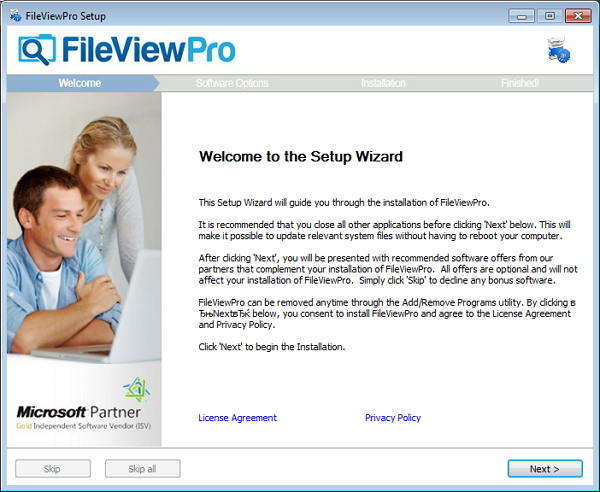
The variety of archive extensions can easily become confusing if you try to match each one with a separate application. This is where an all-in-one viewer such as FileViewPro becomes especially valuable, because it is designed to understand many different compressed formats. With one consistent workflow for many different formats, FileViewPro reduces the risk of errors and saves time when handling compressed archives. Whether you are a casual user, a power user, or somewhere in between, tools like FileViewPro take the complexity out of dealing with compressed files so you can focus on the content rather than the format.
Looking ahead, compressed files will continue to adapt as storage devices, networks, and user expectations evolve. Newer compression methods are being tuned for today’s needs, from huge scientific datasets to interactive online experiences. At the same time, the everyday purpose of compressed files remains familiar: we still need to move large information through limited connections and keep our devices from filling up too quickly. Whether you are emailing a handful of photos, archiving years of work, distributing software, or backing up business systems, compressed files continue to do the heavy lifting in the background. By pairing advanced compression formats with an accessible viewer like FileViewPro, the benefits of smaller, smarter files become available to every user, not just technical experts.